
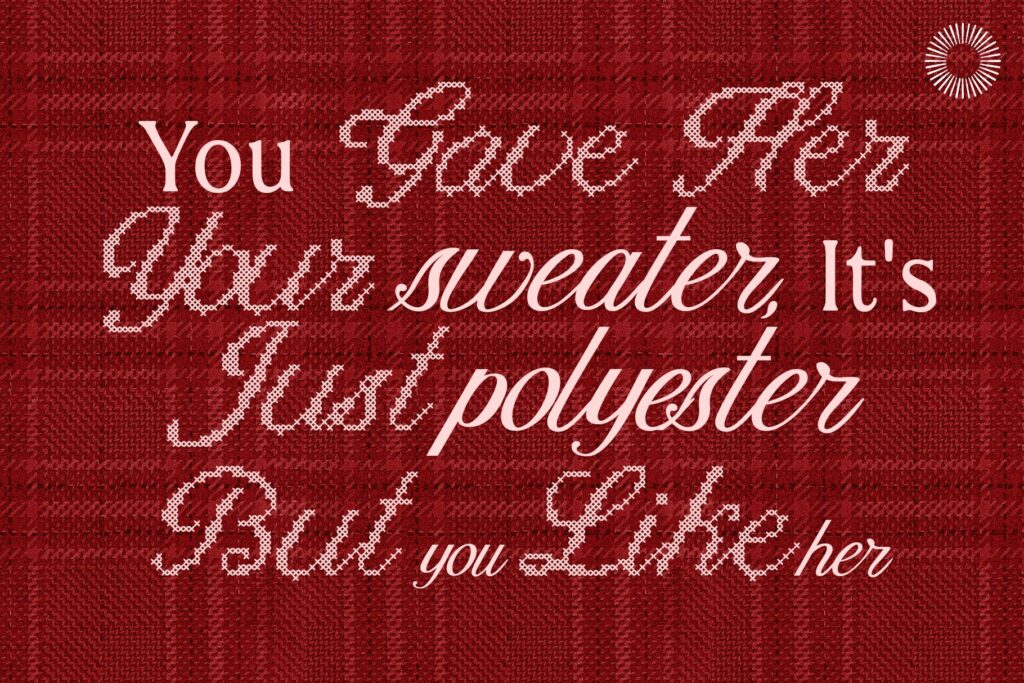
We live in a world where almost everything can be generated instantly. Logos, websites, illustrations, even fonts — all can be created in seconds by machines. Designs are becoming faster, cleaner, and more perfect than ever before. And yet, something interesting is happening. People are slowly getting tired of perfect. They are drawn back to things that feelimperfect, tactile, crafted, real
This is why handmade design feels more human — not just emotionally, but psychologically.
1. Our brains trust what feels imperfect
From a psychological point of view, humans are naturally sensitive to irregularities.
We evolved in a physical world where :
nothing is perfectly symmetrical
nothing is perfectly aligned
nothing is mathematically flawless
So when we see something slightly uneven, organic, or textured, our brains read it as:
“This was made by a real person. ”
And that creates trust. Perfect geometry feels impressive. But slight imperfection feels authentic.
2. The hidden power of human traces
Handmade design always leaves small traces :
- uneven strokes
natural curves
subtle inconsistencies
visible texture
These are not “mistakes ”. They are psychological signals of human presence.
In perception psychology, this is often called a handmade cue — visual evidence that someone invested time, effort, and intention.
And emotionally, humans value, effort more than efficiency.
That’s why a handwritten note feels more meaningful than a printed one. Why a hand-thrown ceramic feels warmer than a factory mold. Why handcrafted typography feels more personal than generic system fonts.
3. Texture triggers memory and emotion
Texture is powerful because it connects design to physical memory. When we see grain, paper fibers, ink bleed, or rough edges, our brains remember books, letters, packaging, old prints, craft materials
Even on a screen, texture activates the same emotional associations touch, material, presence.
That’s why vintage and handcrafted design feels nostalgic, warm, and soulful. Not because it’s “old ”, but because it reminds us of real-world experiences.
4. Why too-perfect design feels distant
In contrast, highly optimized digital design is :
ultra clean
perfectly aligned
perfectly smooth
Psychologically, this often feels :
efficient
professional
but also emotionally flat
There is no trace of effort. No sign of a human hand. No story in the surface.
With AI-generated and template-based visuals becoming common, this effect is even stronger. Many brands now look good, but feel interchangeable. Our brains start to recognize the pattern :“This could be from anywhere. ”
And what feels generic rarely feels meaningful.
5. Handmade design as a form of resistance
At Setara Langit Creative, we see handmade design not as nostalgia, but as a form of intention.
We use handcrafted and vintage-inspired typography because :
it carries human rhythm
it shows visible effort
it feels emotionally grounded
Even when paired with clean editorial systems, the handcrafted layer adds:
warmth
memory
personality
It reminds people that behind the brand, there are real humans.
6. Final thoughts
Handmade design feels more human because it speaks the same visual language as we do imperfect, tactile, and full of traces. In a world of instant generation and infinite sameness, what stands out is not perfection. What stands out is presence.
Presence is something only human design can truly carry.
One Comment
Naufal
ohh I love the concept of presence over the perfection. Great read!